
Chrysalis prize
SELECTION COMMITTEE

HOPI HOEKSTRA
Harvard University
Edgerley Family Dean of the Faculty of Arts and Sciences, C. Y. Chan Professor of Arts and Sciences, and Xiaomeng Tong and Yu Chen Professor of Life Sciences Hopi Hoekstra, a pathbreaking scholar of the life sciences, has led the Faculty of Arts and Sciences since August 1, 2023. Her research lies at the intersection of genetics and neurobiology, with a focus on understanding how genes can affect behavior. Her research has been recognized with the National Academy of Sciences’ Lounsbery Award and the American Society of Mammalogists’ Merriam Award, among other honors. Dean Hoekstra’s extensive teaching portfolio includes her role as course head and longtime instructor in Life Sciences 1b, one of Harvard College’s foundational science courses, which attracts hundreds of students each year. She has a strong record of mentoring undergraduate and graduate students, as well as postdoctoral fellows, and her teaching has been honored with a Harvard College Professorship and the Fannie Cox Prize for Excellence in Science Teaching. Since joining the Harvard faculty in 2007, Hoekstra has been deeply engaged in collaborative work across campus, chairing and contributing to various committees within FAS and across the University. Through her leadership positions in several scientific societies, she has advocated for promoting women faculty and improving inclusion and belonging in the sciences. She has presented dozens of named and public lectures nationwide and abroad, served as a member of numerous advisory councils and editorial boards, and has been elected to our country’s highest scientific societies, including the National Academy of Sciences.

Philip Kitcher
Columbia University
Philip Kitcher is the John Dewey Professor of Philosophy, Emeritus, at Columbia University, and an Honorary Fellow of Christ’s College Cambridge. His philosophical work ranges from the philosophy of mathematics, the philosophy of science, and the philosophy of biology to ethics, political philosophy, philosophy of education and philosophy in literature and music. His twenty-two books include Vaulting Ambition: Sociobiology and the Quest for Human Nature (1985; awarded the Lakatos Prize for books in the philosophy of science); The Advancement of Science (1993), The Lives to Come:The Genetic Revolution and Human Possibilities (1996), Science, Truth, and Democracy (2001), Living with Darwin (2007; winner of a Lannan Foundation Notable Book award), The Ethical Project (2011), Moral Progress (2021), The Main Enterprise of the World: Rethinking Education (2022), and The Rich and the Poor (2025). He is a Past President of the American Philosophical Association (Pacific Division), a Fellow of the American Academy of Arts and Sciences, and of the British Academy, and a member of the American Philosophical Society. Among his awards are the Prometheus Prize (given by the American Philosophical Association for work expanding the fields of science and philosophy), the Rescher Medal (for systematic philosophy), the Hempel Award (for lifetime achievement in the philosophy of science), and the prestigious BBVA Frontiers of Knowledge Award for work in the Humanities.

David Krakauer
Santa Fe Institute
David Krakauer's research explores the fundamental character of problem-solving matter. This is in contrast to the ordinary and abiotic matter of the universe. This research spans the origin of life and the evolution of intelligence and stupidity on earth, to include processes of "exbodiment" through which intelligence is enhanced and outsourced, using languages and artifacts. The details of this research include studying the evolution of cellular, linguistic, social, and cultural mechanisms supporting communication, memory, and a panoply of information-processing systems. He is also interested in the history of complexity and the way in which language games, rule systems, and paradigms help us to understand systems of knowledge. David's research centers around a series of fundamental questions. These questions are all pursued using a combination of carefully selected model systems and mathematical and computational frameworks. 1. How did life and intelligence evolve in the universe? 2. What is the relationship of evolved problem-solving to fundamental physical and biological laws, to include entropy production, the arrow of time, and natural selection? 3. How do collectives of adaptive agents generate novel ideas and come to predict and understand the worlds in which they live? 4. How do ideas evolve and how do they encode natural and cultural life? 5. What is the relationship of organic to inorganic, cultural, and institutional mechanisms of computation and representation?

Barbara Mills
University of Arizona
Barbara J. Mills is Regents Professor Emerita of Anthropology at the University of Arizona. She received her B.A. in anthropology from the University of Pennsylvania and her M.A. and Ph.D. degrees from the University of New Mexico. She has conducted archaeological research in Guatemala, Turkey, Kazakhstan, and the Southwest U.S. In the Southwest, she has conducted field and laboratory research in the Zuni, Chaco, Mimbres, Rio Grande, Four Corners, and Mogollon Rim areas. Besides Southwest archaeology, her archaeological interests include ceramic analysis, identity, migration, ritual, heritage preservation, and network analysis in archaeology. She directed the Silver Creek Archaeological Research Project (SCARP) in east-central Arizona, where she ran the University of Arizona Archaeological Field School for over a decade. Prof. Mills was the lead PI on multiple NSF grants that funded the Southwest Social Networks Project, the Chaco Social Networks Project, and cyberSW (cybersw.org), which brought together multiple southwestern data sets and online tools for archaeological analysis. Dr. Mills is the recipient of the Society for American Archaeology’s Excellence in Archaeological Analysis award and the American Anthropological Association’s (AAA) Gordon Willey award, and was the Patty Jo Watson Distinguished Lecturer for the Archeology Division of the AAA. Dr. Mills has published over 100 peer-reviewed journal articles and book chapters, and has edited or authored 11 books and monographs including The Oxford Handbook of Southwest Archaeology. She is currently writing a book synthesizing the late Prehispanic Puebloan occupation of the Mogollon Rim area from the perspective of internal frontier networks and dynamics.

Alison Simmons
Harvard University
Alison Simmons is the Samuel H. Wolcott Professor of Philosophy. Her research interests lie at the intersection of philosophy and psychology and focus on the early modern period. Simmons works on questions about the nature of mind in general, the nature of sense perception in particular, and conceptions of the relation between mind and world as they have developed historically from the ancient through the medieval and early modern periods, and also as they are discussed today. For her teaching and advising, Simmons has received the Phi Beta Kappa Teaching Award, the Everett Mendelsohn Mentoring Award, and the Star Family Advising Award. In addition to her research and teaching, Simmons has been instrumental to a variety of university initiatives. Most recently, she is co-founder of Embedded EthiCS @ Harvard, an alliance between Philosophy and Computer Science that teaches computer science students to develop the habit of designing socially responsible computing technology. The program currently serves as a model and inspiration for universities internationally. Simmons received her PhD in philosophy at the University of Pennsylvania in 1994. She was a graduate student in psychology for one year at Cornell University (1987–88). She received her BA in psychology at Bucknell University in 1987 as a first-generation college student. Simmons has taught at Harvard since 1994.

Jill Tiefenthaler
National Geographic Society
As chief executive officer of the National Geographic Society, Dr. Jill Tiefenthaler has set a bold vision for one of the world’s most iconic organizations. She leads the Society’s mission-driven work, guiding a global community of National Geographic Explorers — scientists, innovators, educators and storytellers — dedicated to illuminating and protecting the wonder of our world. She also serves on the Society’s board of trustees. In 2020, Tiefenthaler made history as the first woman to serve as the Society’s CEO. She launched the Society’s strategic plan, NG Next, ushering in a new era of growth and global impact. She is spearheading the transformation of National Geographic headquarters in Washington, D.C., with the opening of the National Geographic Museum of Exploration — the most significant expansion of the Society’s public space in its 137-year history. Opening in 2026, the museum will connect millions with the organization’s mission and the groundbreaking work of its Explorers. Under Tiefenthaler’s leadership, the Society has achieved its most ambitious fundraising results, raising over $100 million each of the past three years. She also strengthened the organization’s partnership with The Walt Disney Company and serves on the board of National Geographic Partners, the joint venture between the Society and Disney. A visionary leader in driving institutional transformation, Tiefenthaler previously spent more than 30 years in higher education. She served as president of Colorado College for nine years, where she led the most ambitious fundraising campaign in the college’s history, created new opportunities for student engagement and led the effort to become a net-zero campus. Earlier in her career, Tiefenthaler was provost at Wake Forest University, and professor of economics and associate dean at Colgate University. Originally from Iowa, Jill grew up on a farm and worked for her family’s popcorn business before earning her B.A. in economics from Saint Mary’s College, Notre Dame. She holds an M.A. and Ph.D. in economics from Duke University.

Chris Thornton
American Council of Learned Societies
Christopher Thornton is the Chief Programs Officer at the American Council of Learned Societies. He joined ACLS in 2025 after seven years as Director of the Division of Research Programs at the National Endowment for the Humanities, overseeing grants and fellowships in support of academic and public scholarship. While at NEH, he created and led a number of agency-wide programs, including the Humanities Perspectives on Artificial Intelligence initiative and the Native American Boarding School initiative, and forged partnerships with international and domestic entities. Before NEH he served as acting head of the Grants Program at the National Geographic Society in support of science, education, and storytelling. He also led an organizational initiative to combat looting and site destruction as National Geographic’s Senior Director of Cultural Heritage, following four years as Lead Program Officer of grants in the earth and social sciences. Dr. Thornton sits on the scientific board of three international journals, was a member of the U.S. Commission to UNESCO, and is director emeritus of the World Heritage Site of Bat in the Sultanate of Oman. He has published numerous articles in archaeology and anthropology and has edited two volumes: Archaeometallurgy in Global Perspective (Springer, 2014) and The Bronze Age Towers at Bat, Sultanate of Oman (University of Pennsylvania, 2016). An expert in the origins of metallurgy and early complex societies in Iran and Arabia, Dr. Thornton holds a Ph.D. in anthropology from the University of Pennsylvania, an M.Phil. in archaeology from the University of Cambridge, and an A.B. in archaeology and archaeometry from Harvard University.
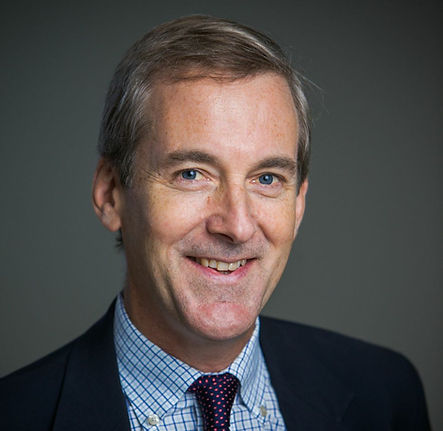
Will Thorndike
Cromwell Harbor Foundation
Will Thorndike is the managing partner of The Cromwell Harbor Partnership, a private investment company with a focus on exceptionally long-term holdings. Prior to Cromwell Harbor, Will founded Housatonic Partners, a leading private equity firm with offices in Boston and San Francisco. Will is a board member of several private companies, including Banyan Software, Carillon Assisted Living, and QMC Telecom. He is former board chairman at CNX Resources, a publicly traded (NYSE: CNX) energy company and the co-chairman of Perimeter Solutions (NYSE: PRM), a global leader in wildfire retardant systems. A former trustee of the Groton School, WGBH, and the College of the Atlantic (chair), Will serves as a trustee to the Land & Garden Preserve. Will has also co-founded two ideas festivals: The Summer Institute at the College of the Atlantic and the Author’s Guild Words, Ideas and Thinkers (WIT) Festival. He lectures frequently at the Stanford and Harvard Business Schools. Will is the author of The Outsiders, which was named by Business Insider as one of “The 25 Most Influential Business Books Ever Published” and has been translated into 17 languages. He is a graduate of Harvard College and the Stanford Graduate School of Business.

Darron Collins
Cromwell Harbor Foundation
Before joining CHF as its inaugural executive director, Darron was president of the College of the Atlantic (COA) in Bar Harbor, Maine. During his 13-year tenure he quadrupled the college’s endowment, doubled the availability of campus-managed housing, and oversaw the development of an award-winning academic building, The Davis Center for Human Ecology. He established COA as the preeminent college dedicated to understanding and improving the relationship between humans and the environment, a quality recognized by The Princeton Review, which has ranked COA as the top green college in the country for nine years running. Darron was managing director with the World Wildlife Fund before joining COA and managed global conservation projects in the Amazon, Central America, Mongolia, and the Russian Far East. He is a cultural received his BA in human ecology from COA and his Ph.D. in anthropology from Tulane University where he conducted ethnobotanical research in northern Guatemala with the Q’eqchi’-Maya. Darron speaks Spanish fluently and is conversational in Portuguese, Q’eqchi’-Maya, and Irish. He serves on the boards of From Houses to Homes, Guatemala, Outer Coast College, and Maine Coast Heritage Trust.